


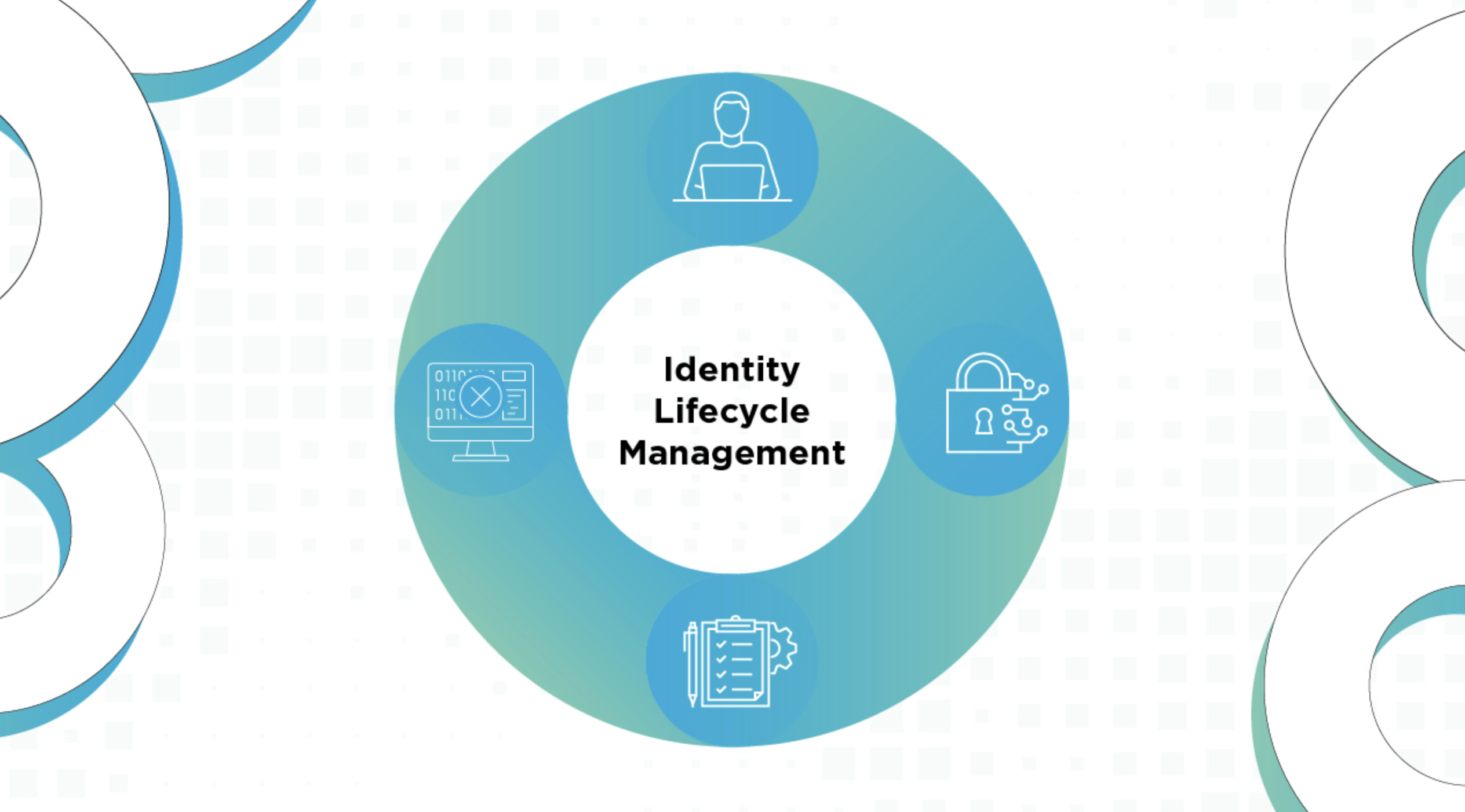
The identity lifecycle management process governs how access is provisioned, maintained, reviewed, and revoked for employees, contractors, service accounts, API keys, machine credentials, OAuth tokens, and autonomous agents. It is part of identity and access management because identity state determines who or what can reach enterprise systems and data.
When ILM breaks down, stale entitlements, orphaned accounts, unmanaged credentials, and excessive privilege can remain available after the business need ends. A strong ILM program keeps access tied to current need, verified ownership, and documented policy.
How the identity lifecycle management process works
The identity lifecycle management process defines how identities move through access states as business conditions change. Many organizations start with IT ticketing workflows. Mature security programs treat ILM as an enforcement layer that connects business events to access decisions and downstream system changes.
Every identity represents one or more access paths. Each access path can become part of the attack surface if it is overprivileged, unowned, or no longer needed. ILM reduces that surface by linking business events, policy decisions, system updates, approval evidence, and deactivation actions.
Identity lifecycle management phases from joiner to leaver
Identity lifecycle management phases are event-driven. Access may need to change when an employee is hired, a contractor starts, a role changes, a project begins, emergency access is granted, an owner changes, or an identity is retired.
- Joiner phase: A new identity is created from an authoritative source, assigned baseline access, and bound to controls such as MFA, device posture, and conditional access.
- Mover phase: Role changes, department transfers, project assignments, and location changes trigger entitlement updates, removals, and new approvals.
- Maintainer phase: Access is reviewed, reconciled, and adjusted to reduce privilege sprawl and policy drift.
- Leaver phase: Access is revoked, active sessions are terminated where supported, credentials are disabled, and ownership is reassigned.
- Decommission phase: Non-human identities, dormant accounts, abandoned tokens, and retired application credentials are removed from the environment.
ILM works when access remains proportional to current business need and can be verified through system records.
Identity synchronization across systems
Identity synchronization across systems keeps directories, applications, SaaS platforms, infrastructure services, and security tools aligned around the same identity state. Without synchronization, one system may show a terminated identity as inactive while another still permits access.
Authoritative sources such as HRIS platforms, contractor management systems, CMDBs, privileged access systems, and cloud identity providers can drive downstream updates. This reduces manual tickets and helps prevent access from persisting after the business justification ends. The design depends on application architecture, regulatory requirements, and available integrations.
Identity synchronization components
- Authoritative source: The system that determines whether an identity should exist and which organizational attributes apply.
- Directory alignment: Synchronization between enterprise directories, identity providers, and access management systems.
- Application state: Updates to SaaS, cloud, legacy, and internal applications that enforce access.
- Credential status: Disablement, rotation, or revocation of passwords, certificates, API keys, SSH keys, and tokens.
Policy triggers, approvals, and audit trails
Policy triggers convert business events into access decisions. A hire date, termination notice, manager change, project assignment, emergency request, or service account owner change should start a defined workflow instead of relying on informal communication.
Approvals create accountability, but approvals alone are not controls. The approval should be policy-aware, time-bound, tied to business context, and retained as evidence for audit, investigation, and recertification.
Lifecycle governance records
- Trigger event: The business or technical change that initiates provisioning, modification, or deactivation.
- Policy decision: The rule that determines whether access is allowed, denied, escalated, or time-limited.
- Approval evidence: The documented authorization from a manager, data owner, application owner, or risk owner.
- Audit record: The retained record of request, approval, fulfillment, review, and revocation, protected against unauthorized modification where possible.
Key elements of identity lifecycle management
Identity lifecycle management depends on clean identity data, enforceable policy, application connectivity, and clear ownership. A lifecycle program cannot govern what it cannot identify, classify, connect, or revoke.
Immature environments often rely on fragmented directories, spreadsheets, application-level administrators, and manual access requests. Mature environments integrate identity data, entitlement catalogs, workflow engines, and enforcement points so access decisions can be applied consistently.
Identity data, directories, and source-of-truth systems
Identity data is the control plane for lifecycle governance. If identity attributes are wrong, downstream access decisions inherit the error, including provisioning, role assignment, recertification, and deactivation.
Source-of-truth systems should define identity status, employment relationship, department, location, manager, job function, contract end date, application ownership, and risk classification. Non-human identities need comparable governance attributes: owner, purpose, system dependency, credential type, expiration date, and rotation requirements.
| Identity Type | Required Ownership Data | Lifecycle Risk |
|---|---|---|
| Employees | Manager, role, department, status | Excess access after role changes or separation |
| Contractors | Sponsor, contract end date, scope | Persistent access beyond engagement |
| Service accounts | Technical owner, application dependency | Orphaned privileges and unmanaged credentials |
| API keys and tokens | Issuer, application, expiration | Long-lived access outside human oversight |
| Autonomous agents | Business owner, action scope, data access | Machine-speed misuse of delegated privileges |
Access policies, entitlements, and application connectors
Access policies determine what an identity may access, under which conditions, and for how long. Entitlements translate those policies into concrete grants across applications, infrastructure, databases, repositories, collaboration tools, and cloud services.
Application connectors bridge policy intent and enforcement. Without reliable connectors or compensating controls, the lifecycle process becomes advisory, leaving administrators to interpret access decisions manually.
Access governance components
- Entitlement catalog: A governed inventory of roles, groups, permissions, privileges, and application-specific access rights.
- Policy mapping: The relationship between business attributes and approved access patterns.
- Connector coverage: Integration depth across SaaS, cloud, legacy, directory, and infrastructure platforms.
- Exception handling: Controlled deviation from standard policy with expiration, justification, and review.
Automated provisioning and deprovisioning in ILM
Automated provisioning and deprovisioning determine how quickly identity state becomes access reality. Delays create exposure. If a terminated identity, expired contractor, or retired service account remains active, the organization carries an avoidable attack surface.
Automation does not remove governance. It enforces governance at operational speed when policies, data, and connectors are reliable. Mature programs automate low-risk, policy-approved access while routing high-risk, privileged, or anomalous access through stronger approval and monitoring controls.
Onboarding and offboarding users with automation
Onboarding and offboarding should be precise, timely, and evidence-backed. The same standard applies to human and non-human identities because abandoned employee accounts and overprivileged service credentials can both provide unauthorized access paths.
- Identity creation: The authoritative system initiates an identity record with validated attributes and ownership.
- Baseline access: Birthright access is assigned based on role, location, employment type, and business unit.
- Control enrollment: MFA, device requirements, conditional access, logging, and session policies are applied where supported.
- Access modification: Role changes and project assignments trigger entitlement updates and removals.
- Access revocation: Termination, contract expiration, decommissioning, or ownership loss triggers disablement and credential revocation.
The offboarding sequence should include session termination, token revocation, mailbox or data ownership transfer, privileged access removal, and orphaned account detection. Deactivation is not complete until downstream systems confirm enforcement or a documented compensating control is in place.
Birthright access, just-in-time access, and orphaned account removal
Birthright access provides the minimum access required for an identity to function from day one. It should be narrow, role-aligned, and checked against actual job requirements.
Just-in-time access reduces standing privilege by granting elevated rights only when needed, for a defined purpose, and for a limited duration. Orphaned account removal closes the lifecycle gap where identities remain active without a valid owner, source record, or business justification.
| Access Model | Security Function | Primary Risk Controlled |
|---|---|---|
| Birthright access | Provides baseline entitlements | Overprovisioning during onboarding |
| Just-in-time access | Limits duration of privilege | Standing administrative exposure |
| Orphaned account removal | Eliminates unmanaged accounts | Persistent unauthorized access paths |
Role-based access control and least privilege access reviews
Role-based access control (RBAC) provides structure, but it does not guarantee least privilege on its own. Roles can become bloated, exceptions can become permanent, and inherited entitlements can expand beyond operational need.
Least privilege access reviews verify whether access remains justified. Mature programs often combine RBAC, attribute-based context, risk scoring, behavioral signals, and periodic recertification to prevent privilege sprawl.
Designing RBAC roles and handling exceptions
RBAC roles should reflect stable business functions, not every temporary access request. A role with excessive entitlements becomes a privilege bundle that expands exposure for every identity assigned to it.
Exception handling is where many RBAC models fail. Temporary access, emergency privilege, project-based entitlements, and executive overrides should have expiration dates, documented justification, approval evidence, and automated removal where technically possible.
RBAC governance controls
- Role design: Roles should map to job function, operational need, and data sensitivity.
- Role ownership: Each role requires a business or application owner accountable for entitlement accuracy.
- Role hygiene: Unused, duplicative, and overbroad roles should be retired or refactored.
- Exception control: Deviations require time limits, risk justification, and recertification.
Running least privilege access reviews and recertifications
Least privilege access reviews determine whether entitlements remain appropriate for each identity. Reviews should not be rubber-stamp exercises driven by unreadable entitlement lists and fatigued managers.
Effective recertification gives reviewers context: identity type, role, last login, entitlement sensitivity, usage history, privilege level, peer comparison, and policy violations. Access that cannot be justified should be removed or escalated for risk acceptance under a documented process.
- Review scope: Select identities, applications, privileged entitlements, and high-risk access paths.
- Reviewer assignment: Route decisions to managers, application owners, data owners, or privileged access owners.
- Risk context: Include usage, sensitivity, anomaly signals, and policy exceptions.
- Decision capture: Record approval, revocation, delegation, or escalation.
- Remediation tracking: Confirm removal actions and retain audit evidence.
Benefits of an effective identity lifecycle management system
An effective identity lifecycle management system reduces exposure by making access changes faster, cleaner, and easier to defend. It helps security teams make identity state measurable, enforceable, and auditable.
The value is not only efficiency. Strong ILM can reduce the chance that stale access, excessive privilege, unmanaged credentials, or orphaned accounts become usable infrastructure for attackers.
Faster onboarding, lower IT workload, and better user experience
Efficient onboarding accelerates productivity without weakening control. New employees, contractors, and service identities receive the access they need based on policy, not ticket volume or administrator interpretation.
Automation reduces repetitive fulfillment work for IT and security teams when identity data and connectors are reliable. Instead of manually creating accounts, assigning groups, and chasing approvals, teams can focus on exception handling, control validation, and risk remediation.
User experience and workload gains
- Faster access: Approved entitlements are provisioned without unnecessary manual delay.
- Lower workload: Repetitive tasks shift from administrators to governed workflows.
- Cleaner changes: Role moves trigger both additions and removals.
- Reduced friction: Business teams get timely access without bypassing policy.
Stronger compliance, audit readiness, and identity security
Compliance depends on proving that access is appropriate, approved, reviewed, and revoked when no longer required. ILM creates the evidence trail auditors expect and security teams need during investigations.
Regulated environments need consistent control over identity creation, entitlement assignment, privileged access, segregation-of-duties conflicts, termination handling, and non-human identity governance.
Compliance and security outcomes
- Audit evidence: Request, approval, provisioning, review, and revocation records are retained.
- Policy enforcement: Access decisions reflect documented controls rather than informal practice.
- Risk reduction: Stale identities, excessive entitlements, and orphaned credentials are removed.
- Incident support: Investigators can reconstruct who had access, when, why, and through which path.
How an identity security platform improves lifecycle governance
An identity security platform can improve lifecycle governance by unifying identity data, access policy, workflow orchestration, entitlement visibility, and remediation. It gives security teams a consolidated view of access risk across human and non-human identities.
Mature platforms may also detect policy drift, privilege accumulation, anomalous access, toxic combinations, and dormant credentials. This moves ILM from periodic administration toward continuous identity risk management, as long as the platform is connected to the systems that enforce access.
| Capability | Governance Value | Security Outcome |
|---|---|---|
| Identity correlation | Links accounts to owners | Reduces orphaned access |
| Workflow automation | Enforces approvals and fulfillment | Speeds controlled provisioning |
| Entitlement analytics | Shows excessive or unused access | Reduces privilege sprawl |
| Access certification | Structures recertification evidence | Improves audit readiness |
| Non-human governance | Manages service accounts and tokens | Controls fast-growing machine exposure |
Common identity lifecycle management challenges
Identity lifecycle management fails when operational change outpaces governance. Business units reorganize, contractors rotate, applications multiply, cloud resources expand, and non-human identities proliferate.
The result is access drift. Entitlements accumulate, ownership becomes unclear, and security teams lose confidence that identity state reflects current, verified need.
Data quality and ownership gaps
Data quality is the foundation of lifecycle control. Incomplete manager fields, outdated department codes, missing contract end dates, unmanaged service account ownership, and inconsistent naming conventions weaken every downstream process.
Ownership gaps create a larger problem: no accountable party can validate whether access should exist. Mature programs assign ownership for identities, applications, entitlements, roles, connectors, and exception approvals.
Data governance requirements
- Attribute accuracy: Identity attributes must be complete, current, and normalized.
- Ownership assignment: Every account, role, entitlement, and credential requires an accountable owner.
- Lifecycle metadata: Start dates, end dates, purpose, and status must drive access state.
- Data stewardship: HR, IT, security, and application owners must share governance responsibility.
Legacy applications and integration complexity
Legacy applications often lack modern APIs, standardized entitlement models, or reliable deprovisioning controls. These systems become lifecycle blind spots because access changes may require manual intervention or custom integration.
Integration complexity is not an excuse for unmanaged access. Mature programs prioritize high-risk applications, privileged systems, regulated data stores, and externally exposed services for connector development, reconciliation, or compensating controls.
Integration control priorities
- Connector gaps: Applications without direct integration require monitored manual fulfillment or scheduled reconciliation.
- Entitlement ambiguity: Legacy permissions must be mapped into understandable access rights.
- Privileged systems: Administrative access requires stronger review, logging, and rapid revocation.
- Compensating controls: Where automation is limited, evidence, monitoring, and periodic validation must increase.
Balancing automation, security, and business flexibility
Automation must prevent overprovisioning while still supporting legitimate business change. Too much friction can drive shadow access paths. Automation without governance can accelerate privilege sprawl.
Mature programs use risk-based orchestration. Low-risk, policy-approved access can be automated end-to-end, while privileged, sensitive, unusual, or high-impact access requires additional approval, time limits, and monitoring.
The operating principle is direct: access should reflect current, verified need at every point in time. Anything more is avoidable exposure. Anything stale is an attacker’s opportunity.
